

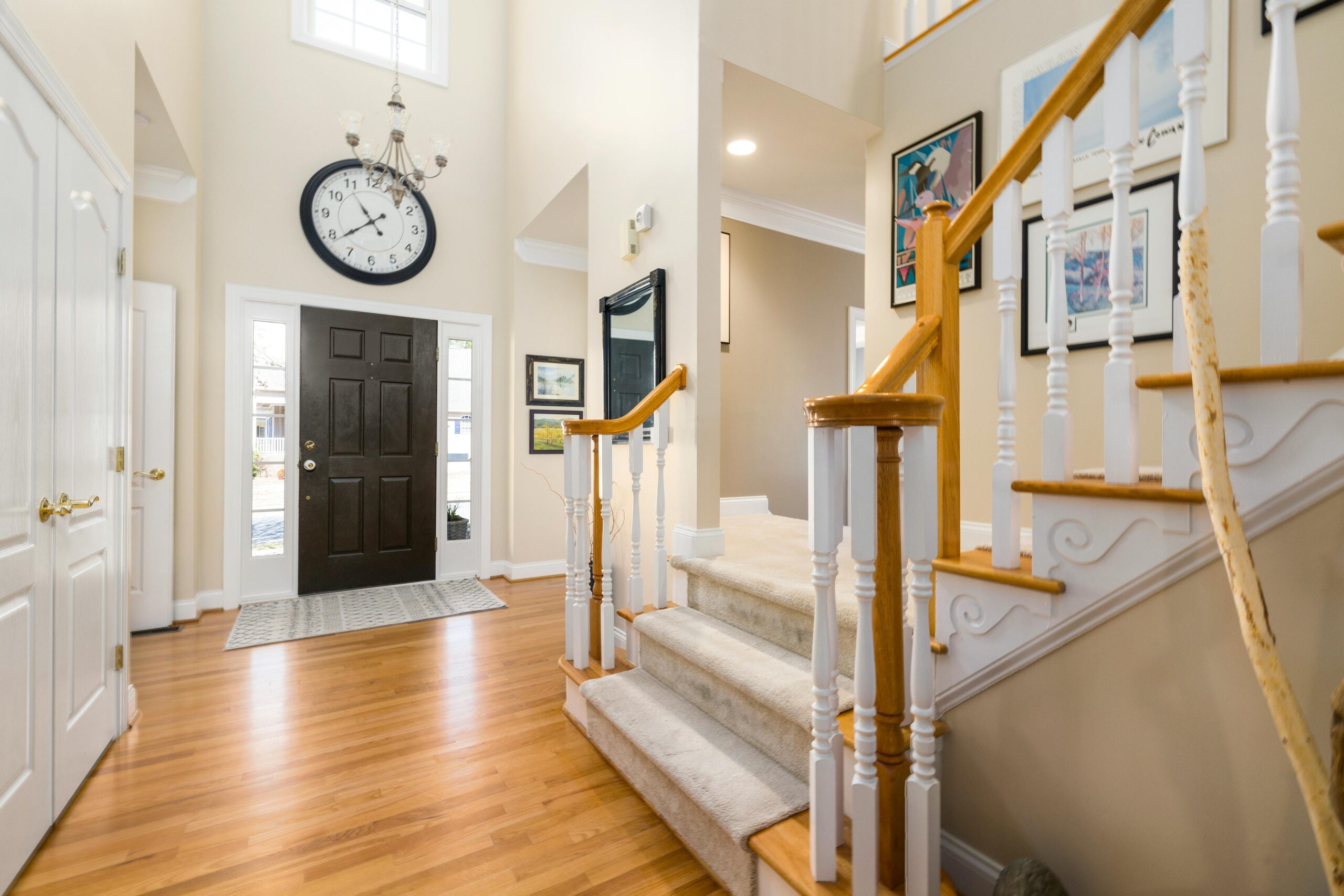
Transitioning from hardwood flooring to carpeted stairs might seem like a small detail, but it plays a big role in both the appearance and safety of your home. Without the proper transition, you’re left with an unsightly gap, frayed edges, or even a tripping hazard. Whether you’re upgrading your floors or finishing a new installation, knowing how to handle the hardwood floor to carpet stairs transition is key to a polished and lasting result.
In this guide, we’ll walk you through the most common challenges, the best transition options available, and tips to ensure a seamless finish. Let’s fix that flooring gap, and make it look great while we’re at it.
List of Contents
Why Transitions Between Hardwood and Carpet Matter
A proper transition between hardwood flooring and carpeted stairs is about more than just aesthetics; it’s essential for safety, durability, and functionality. Without a secure edge, the carpet can fray over time, and the exposed edge of hardwood can become worn or chipped. Worse, the gap between the two surfaces can create a tripping hazard, especially in high-traffic areas like stairways.
A well-installed transition provides a clean, finished look while protecting both flooring types and reducing long-term maintenance. It also helps unify the design of your space, blending different textures and materials into one cohesive flow.
Common Transition Challenges
Bridging the gap between hardwood floors and carpeted stairs isn’t always straightforward. Several challenges can arise during the transition, including:
- Height Differences: Hardwood flooring is often thicker than carpet, leading to an uneven surface where the two meet. This can result in a noticeable step or gap if not addressed properly.
- Fraying Carpet Edges: Without a secure edge or transition piece, carpet can unravel at the seam, leading to premature wear and an untidy appearance.
- Visible Gaps: If the connection between the hardwood and carpet isn’t tight, you may end up with unsightly gaps that collect debris and detract from the overall look.
- Loose or Unstable Edges: An improperly secured transition can shift underfoot or even lift over time, creating a safety concern and reducing the lifespan of your flooring.
Addressing these issues with the right tools and methods ensures a smoother, safer, and more visually appealing result.
Popular Transition Solutions
There are several effective ways to bridge the gap between hardwood flooring and carpeted stairs. The best option depends on the height difference, the location, and the overall design of your space. Here are a few of the most popular solutions:
- T-Molding: Ideal for areas where hardwood and carpet are close in height. T-moldings fit into a small gap between the two surfaces and create a clean, level connection.
- Reducer Strips: These sloped transition pieces are perfect for bridging height differences. They provide a gentle slope from the higher hardwood to the lower carpeted surface.
- Carpet End Cap (or Hard Surface Reducer): Designed to butt up against the carpet edge, this option secures the carpet while giving a polished end to the hardwood flooring.
- Z-Bar Transition: Often used on stairs, a Z-bar is installed under the carpet and tucked to create a seamless, stretched look where the carpet meets the hardwood. It’s especially useful for stair noses and tight transitions.
Choosing the right transition piece not only solves the functional challenge but also enhances the overall appearance of the flooring connection.
Achieving a seamless transition between hardwood floors and carpeted stairs requires careful planning and attention to detail. Here are a few installation tips to help ensure a clean, secure result:
- Measure Accurately: Start by measuring the gap between the hardwood and carpet. This determines the type of transition piece you’ll need and helps avoid uneven edges or visible seams.
- Cut Transition Strips Precisely: Use a fine-tooth saw to cut your transition molding or reducer strips to the correct length. Clean cuts make for a more professional-looking installation.
- Secure Properly: Depending on the type of transition, you may use adhesive, finishing nails, or a metal track system. Make sure the transition piece is firmly anchored to prevent shifting or lifting.
- Stretch and Tuck Carpet: When using Z-bars or carpet end caps, ensure the carpet is tightly stretched and tucked underneath to prevent fraying or bulging over time.
- Test for Stability: Once everything is in place, step on the transition to confirm it feels solid. A secure transition not only looks better but also lasts longer.
For tricky layouts or materials that don’t align easily, hiring a flooring professional can save time and ensure a polished result.
When to Call a Flooring Professional
While many flooring transitions can be handled as a DIY project, there are situations where calling a professional is the smartest move. If your hardwood and carpet have significant height differences or if the subfloor is uneven, the installation can become tricky and may require specialized tools or materials to get it right. Complex stair configurations, such as winding or split staircases, also benefit from expert handling to ensure that transitions are both functional and visually seamless.
Additionally, if you’re working with high-end materials, a professional can help protect your investment by ensuring precise cuts and secure installations that won’t damage your flooring. Professionals are also well-versed in building codes and safety standards; something that’s especially important for stair transitions where a misstep can create a hazard. When in doubt, bringing in a flooring expert can save time, prevent costly mistakes, and deliver a result that looks polished and lasts longer.
Get the Perfect Hardwood Floor to Carpet Stairs Transition
A clean, secure transition between your hardwood floors and carpeted stairs does more than just fill a gap; it ties your space together, adds safety, and protects your flooring investment. Whether you’re dealing with uneven heights, worn carpet edges, or an awkward staircase layout, using the right materials and methods makes all the difference.
If you’re unsure where to start or want a flawless result, the team at Dublin Carpet is here to help. From expert advice to professional installation, we’ll make sure your flooring transition is smooth, durable, and stylish. Contact us today to schedule your consultation.


