
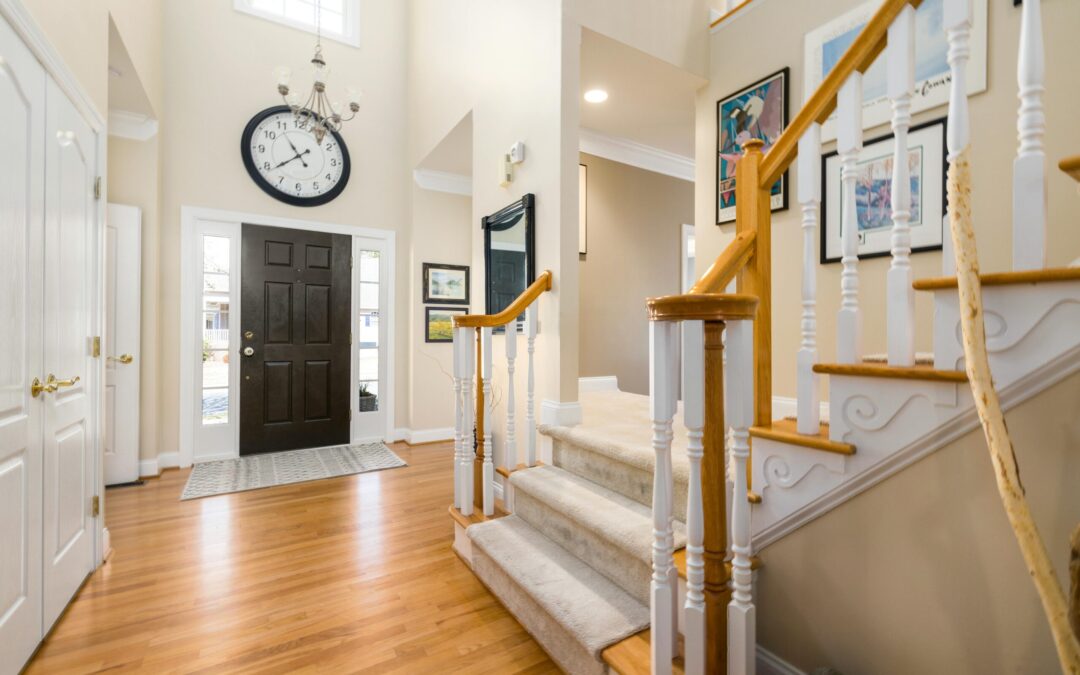
A carpet stairs to wood floor transition may seem like a small detail, but it can make a big difference in the safety and appearance of your home. When carpeted stairs meet hardwood, laminate, or luxury vinyl plank (LVP) flooring, the edges need to connect cleanly without leaving gaps, loose carpet, or uneven surfaces.
The right transition helps protect the carpet edge, creates a finished appearance, and connects the staircase with the surrounding flooring. Whether you’re updating an entryway, remodeling an upstairs hallway, or choosing new flooring for your home, understanding your transition options can help you make the right decision.
Dublin Carpet helps homeowners in Dublin and the Tri-Valley coordinate carpet, hardwood, laminate, and vinyl flooring for a cohesive look throughout their homes.
Why the Stair-to-Floor Transition Matters
A properly finished transition serves three important purposes: safety, durability, and design.
Safety: A loose carpet edge or unexpected height difference can catch a foot and create a tripping hazard. The transition should feel stable underfoot, with no raised edges or loose components.
Durability: The edge of carpeted stairs receives frequent contact from shoes, pets, and everyday foot traffic. Securing the carpet properly helps reduce fraying and premature wear.
Appearance: A well-planned transition makes the staircase look intentional rather than like two flooring materials were installed separately. Coordinating the carpet, stair nosing, and nearby floor color helps the entire space feel connected.
The correct solution depends on the thickness of each flooring material, the staircase construction, and where the carpet meets the hard surface.
Where the Transition Happens
The location of the transition affects which installation method will work best. The top of the stairs, bottom step, and intermediate landings each present different considerations.
Top of the Stairs
The top step is often the most noticeable point where carpet meets wood flooring. The carpet needs to end securely while the hardwood, laminate, or vinyl plank flooring finishes neatly beside it.
A stair nose or suitable carpet-edge transition may be appropriate, depending on the staircase design and flooring manufacturer’s installation requirements. The goal is to avoid an exposed carpet edge, a visible gap, or a raised strip that interferes with normal walking.
For a top step carpet stairs to wood floor transition, measure the finished floor heights before selecting a transition piece. Account for the carpet and padding as well as the thickness of the hard flooring.
Bottom of the Stairs
At the bottom of the staircase, carpet often meets an entryway, foyer, or hallway with a hard floor. This area can experience considerable foot traffic, dirt, and moisture tracked in from outside.
A durable, securely anchored transition helps protect the carpet edge while creating a clean connection to the adjoining floor. Choose a finish that complements the nearby wood tone or other flooring color.
Stair Landings
Landings may connect carpeted stairs with hardwood, laminate, or LVP flooring on the same level. Because these spaces can be wider than a single stair tread, the transition may run across a longer edge.
Keep the connection straight and consistent where possible. If the landing has an unusual shape or multiple flooring materials meet, professional measurements can help prevent awkward seams and uneven edges.
Transition Options for Carpet Stairs and Wood Floors
Several transition methods can work when connecting carpeted stairs with wood flooring. The best choice depends on the height difference, edge construction, and desired appearance.
Flush Stair Nosing
Flush stair nosing creates a relatively level, integrated finish at the edge of a hard-surface stair or landing. It can be a good option when the flooring system is designed to accommodate that type of nosing.
When carpet meets hardwood at the top or bottom of a staircase, the installer must determine how the carpet edge will be secured alongside the nosing. A flush profile is not automatically suitable for every carpet-to-wood connection.
Overlap Stair Nosing
Overlap stair nosing extends over the edge of a stair tread or flooring surface. It can provide a defined edge and help protect the exposed corner, depending on the product and application.
The profile must be compatible with the flooring material and staircase construction. When carpet meets a hard floor, confirm that the nosing will not create an excessive lip or an unstable walking surface.
Carpet Edge Strips and Reducers
Carpet transition strips and reducers can help finish the point where carpet meets a hard surface. A reducer is generally used to accommodate a difference in flooring height, while a carpet-edge transition can secure and cover the carpet’s exposed edge.
Not every transition strip is designed for stair applications. Choose a product intended for the specific location and flooring materials rather than assuming a standard doorway strip will work on a staircase.
Can You Go From Hardwood to Carpet Without a Transition Strip?
Sometimes, yes. A visible metal or wood strip is not always necessary, but the carpet edge must still be finished and secured correctly.
Depending on the installation, a professional may use a tucked carpet edge, a suitable tack or fastening system, or a compatible stair-nosing detail. The right method depends on the subfloor, flooring heights, and how the carpet terminates.
For a closer look at transitions in doorways and rooms, read our guide to hardwood to carpet transitions in doorways and rooms. Staircases have different safety and edge-finishing requirements, so the appropriate installation method may differ.
Carpet Stairs to Laminate Floor Transition and LVP Options
Carpeted stairs can work beautifully with laminate or luxury vinyl plank flooring. Both materials offer wood-look finishes in a variety of colors, making it possible to coordinate a staircase with the flooring in an entryway or upstairs hallway.
However, laminate and LVP have different installation requirements, so the transition should be selected for the specific product.
Transitioning Carpet Stairs to Laminate Flooring
A carpet stairs to laminate floor transition often uses a compatible transition profile or stair-nosing component to create a clean connection between the materials.
Laminate planks typically use a floating installation system. The transition must accommodate the flooring manufacturer’s expansion requirements without pinning down the floating floor improperly. The carpet edge also needs to be securely finished.
Compare the laminate’s color, grain, and plank width with the carpet before making your selection. Explore Dublin Carpet’s laminate flooring options to find a style that complements your staircase.
Carpet Stairs to Vinyl Floor Transition
Luxury vinyl plank flooring is another popular option for homes that want the appearance of wood with a different maintenance profile. A carpet stairs to vinyl floor transition may use a compatible reducer, end profile, or stair-nosing system, depending on the installation.
For a vinyl-to-carpet or LVP-to-carpet transition, make sure the selected profile accommodates the thickness of both materials. Some LVP products have manufacturer-specific stair parts, while others require a separate compatible transition.
Explore Dublin Carpet’s luxury vinyl options to compare wood-look colors and finishes for your home.
Important: Stair nosing, transition pieces, and fastening methods should be compatible with the flooring manufacturer’s instructions. Avoid combining components simply because their colors match.
Carpeted Stairs With Wood Floors: Design Ideas
The best designs make carpeted stairs and wood floors feel like parts of the same home. You do not have to match every color exactly. Instead, look for complementary undertones, balanced textures, and a consistent finish.
Matching Carpet Color to Your Wood Tone
For warm oak, honey, or walnut flooring, consider carpet in beige, taupe, warm gray, or another complementary neutral. These shades can connect the staircase to the surrounding wood without making the colors compete.
For cooler gray or greige flooring, a coordinating gray, soft ivory, or neutral patterned carpet may create a cohesive look. If your hardwood has prominent grain or variation, a simpler carpet can keep the space from feeling too busy.
Bring carpet samples into the actual stairway and compare them under daytime and evening lighting. Wall color, natural light, and nearby furniture can all affect how a carpet looks next to wood flooring.
Stair Runners vs. Wall-to-Wall Stair Carpet
A stair runner covers the center of each tread while leaving some of the stair material visible on both sides. This style works especially well when you want to showcase hardwood stairs while adding a softer walking surface.
Wall-to-wall stair carpet covers the full width of the stairs. It can create a more uniform appearance and is useful when the existing treads are worn or when you prefer a fully carpeted staircase.
Consider the appearance of the stairs themselves, the width of the staircase, and how much maintenance you want to manage. For additional guidance, see our tips on how to keep stair carpet looking fresh.
Finishing the Risers and Stair Edges
The risers—the vertical surfaces between treads—can affect the overall design as much as the carpet color. Some homeowners prefer carpeted treads and risers for a continuous appearance, while others choose exposed wood risers or contrasting finishes.
If your staircase has exposed hardwood edges, coordinate their stain or finish with the nearby flooring when practical. For a more decorative look, a stair runner with a subtle pattern can add character without overwhelming the room.
Keep the design secondary to safety. The carpet should be firmly secured, the stair edges should be clearly defined, and the finished surface should not introduce unexpected changes in height.
Choosing Carpet Patterns and Textures
A solid neutral carpet is a versatile choice for busy interiors, while a subtle stripe or geometric pattern can make a staircase a focal point. Textured carpet can also help disguise minor everyday soil.
For a coordinated result, compare carpet samples with your flooring, wall paint, trim, and nearby furnishings. Visit the Dublin Carpet carpet showroom to explore options and find a combination that suits your home.
Installation Tips for a Clean, Safe Finish
A successful carpet stairs to wood floor transition begins with careful preparation. Keep these considerations in mind before installation:
- Measure finished heights: Account for carpet, padding, flooring, and transition components to avoid an uneven connection.
- Inspect the staircase: Address loose treads, damaged edges, and uneven surfaces before installing new materials.
- Choose compatible components: Use stair nosing and transition profiles intended for the flooring product and application.
- Secure the carpet edge: The carpet should not pull away, lift, or unravel where it meets the hard surface.
- Check the finished walking surface: Look for loose pieces, protruding fasteners, gaps, or unexpected lips that could create a tripping hazard.
- Follow manufacturer instructions: Floating laminate and vinyl floors may require expansion clearance and specific fastening methods.
If you notice worn or unraveling carpet, address the damage before it spreads. Our guide explains how to prevent carpet edges from fraying.
When to Call a Flooring Professional
A professional flooring installer can help when the staircase has unusual dimensions, the flooring heights do not align, or the transition involves several materials. Expert guidance is also helpful when installing new laminate or LVP near carpeted stairs, since product requirements can affect the correct transition method.
If you’re remodeling the staircase and considering replacing the carpet altogether, review your options for replacing carpet with hardwood.
Dublin Carpet can help you compare flooring styles, choose compatible transition components, and plan a finish that suits your home and everyday needs.
FAQs
What is the best transition from carpet stairs to a hardwood floor?
The best transition depends on the height difference, stair construction, and flooring system. A compatible stair-nosing detail or carpet-edge transition may provide a clean, secure connection. The carpet edge should be fully secured, and the finished surface should not create a tripping hazard.
How do you finish carpet at the top of the stairs?
Measure the finished floor heights, select a compatible transition method, and secure the carpet edge so it cannot lift or fray. The correct approach depends on how the carpet meets the hard flooring and whether the installation requires a specific stair-nosing component.
Do you need stair nosing with carpeted stairs?
Not every carpeted stair installation uses the same type of nosing. Requirements depend on the staircase construction, applicable safety requirements, and the materials being installed. When carpet meets a hard-surface landing, the edge still needs to be properly finished and secured.
Do carpeted stairs look good with hardwood floors?
Yes. Carpeted stairs and hardwood floors can complement each other when their colors and textures work together. Neutral carpet, coordinated wood tones, and a well-finished transition can create a balanced look. A stair runner is another option if you want to show more of the wood.
Can you replace stair carpet with hardwood later?
Yes, depending on the condition and construction of the existing stairs. Before replacing carpet with hardwood, check the underlying treads, stair dimensions, and finished heights. The new surface must be installed securely and safely. Learn more about replacing carpet with hardwood.
Can you transition carpet stairs to laminate or LVP flooring?
Yes. A compatible transition or stair-nosing component can connect carpeted stairs with laminate or luxury vinyl flooring. The correct product depends on the flooring thickness, installation method, and manufacturer’s requirements. Floating floors may also need room to expand and contract.
How do you keep a carpet-to-wood stair transition from fraying?
Make sure the carpet edge is cut cleanly and secured using an appropriate installation method. Avoid leaving exposed, loose fibers at the transition. Regularly inspect the area for lifting or wear so small problems can be addressed before they become more extensive.
Get a Seamless Stair Transition in Dublin and the Tri-Valley
A well-planned carpet stairs to wood floor transition brings together safety, durability, and style. Whether your staircase meets hardwood, laminate, or luxury vinyl plank flooring, choosing the right edge detail helps create a clean finish that complements the rest of your home.
Dublin Carpet can help you explore carpet and hard-surface flooring options for your next project. If you’re planning a renovation or need help choosing a transition, schedule a consultation to discuss your needs.
Call Dublin Carpet at (925) 833-0165 to get started.