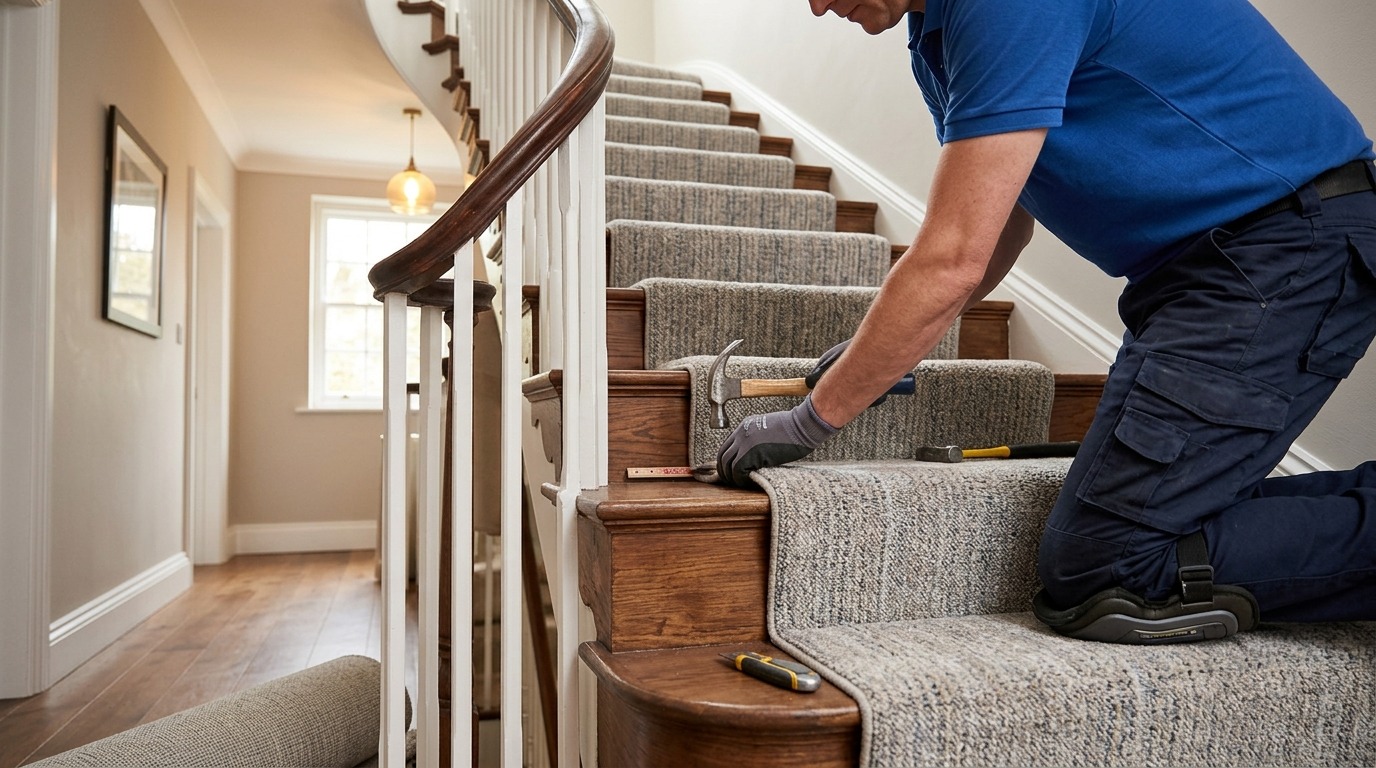
Stairs take a surprising amount of wear every day, especially in active households. Installing carpet on stairs can make each step quieter, softer, and more comfortable for everyone. It can also bring warmth to a hallway or entry that currently feels plain.
A stairway often becomes the busiest path in the house without anyone noticing. Kids race upstairs, pets follow close behind, and laundry baskets make frequent trips. The right carpet helps that space handle daily life while looking pulled together.
Installing Carpet On Stairs Starts With The Right Plan
Installing carpet on stairs involves more than picking a color you like. The carpet needs to fit tightly around every tread, riser, and stair edge. It also needs the right padding and installation method for long-term performance.
Each stair has two important sections. The tread is the flat part where your foot lands. The riser is the vertical piece that connects one step to the next.
Those parts need careful measurement because stairs are not always identical. Older homes can have small differences between steps that are easy to miss. A professional installer measures each area instead of assuming every stair matches.
Before installing carpet on stairs, we inspect the staircase itself. Loose treads, squeaks, exposed nails, and damaged edges should be addressed first. Carpet cannot fix a structural issue hiding beneath the surface.
The preparation work makes a major difference in the finished result. A secure staircase gives the carpet a better foundation and helps it stay in place. It also keeps the finished steps from feeling lumpy or uneven underfoot.
Why Carpet Works Well On Staircases
Carpet brings a softer feel to a staircase that may currently have bare wood. It gives your feet more traction than smooth hardwood or laminate in many situations. That extra grip can be helpful for kids, pets, and anyone carrying items upstairs.
Installing carpet on stairs can also reduce noise across the home. Footsteps on bare stairs can echo through hallways and upstairs rooms. Carpet absorbs part of that sound and makes the house feel less noisy.
Many homeowners also like how carpet softens the appearance of a staircase. A light neutral can brighten a dark hallway, while a patterned style adds personality. Stairs are often one of the first things guests see near an entry.
The practical benefits matter as much as the style. Carpet offers a little more cushion if someone stumbles on the stairs. It will not eliminate fall risks, but it can soften the impact compared with a hard surface.
Selecting Carpet For High Traffic Steps
A staircase needs carpet built for frequent use. Stairs receive concentrated foot traffic because everyone uses the same narrow path. A soft bedroom carpet may look appealing, but it may flatten quickly on heavily used steps.
Low-pile carpet is often a smart choice for stairs. It gives you a tighter surface that handles traffic without feeling bulky. Dense fibers can help the carpet keep its shape near the stair edge.
Patterned carpet is another practical option for busy homes. Small patterns can hide minor marks and everyday wear between professional cleanings. A multitone color can also disguise the occasional scuff from shoes.
When installing carpet on stairs, look at the carpet’s durability rating. Ask about fiber construction and how the material handles compression over time. We can help you compare samples based on your household’s daily use.
Our carpet flooring options include styles that can work well for stairs, bedrooms, and living spaces. Bringing a sample near your stairway can help you see how it looks in your lighting. It also gives you a better sense of color beside your walls.
Padding Makes A Real Difference
Padding is hidden after installation, but it plays an important role under stair carpet. It adds comfort and helps support the carpet as people walk up and down. The padding also helps the carpet feel more secure beneath your feet.
Stair padding needs to be firm rather than thick and squishy. Very soft padding can make the carpet feel unstable on narrow treads. Firm padding supports the carpet without adding too much bulk around the stair nose.
During installation, padding is generally cut to fit each tread precisely. It is usually kept off the riser because the riser does not receive foot traffic. Proper placement helps maintain a smooth and finished appearance.
Installing carpet on stairs with the wrong padding can create problems later. The carpet may feel loose, look bulky, or show uneven edges. Good materials and proper installation methods help avoid those frustrating outcomes.
Waterfall And Cap And Band Styles
There are two common ways to install carpet on stairs. The waterfall method lets carpet flow over the stair edge and down the riser. The cap and band method wraps carpet closely around the front edge of every tread.
Waterfall installation often creates a smooth, clean appearance. It can work well with many carpet styles and standard stair shapes. It may also be a good fit when homeowners want a simpler visual look.
Cap and band installation follows the shape of each step more closely. The carpet wraps tightly around the stair nose before continuing down the riser. This method can give stairs a more tailored finish.
Installing carpet on stairs requires the right approach for your staircase and carpet type. Some materials bend around stair edges more easily than others. We help homeowners understand which method works best before installation begins.
Both methods need tight stretching and secure fastening at the right points. Tack strips and hidden staples are often used to hold the carpet in place. A properly installed carpet should not shift, ripple, or pull away from the edges.
Full Carpet Or A Stair Runner
A fully carpeted staircase covers the entire width of every step. This option creates a soft, unified look that works well in family homes. It can also make a narrow staircase feel more comfortable underfoot.
A stair runner leaves exposed wood on both sides of the carpet. It adds texture and style while still giving you a soft walking path. Runners can work beautifully in homes with attractive hardwood stairs worth showing off.
The decision often comes down to the condition of the existing staircase. If the wood is worn, full carpet may give it a fresh look. If the wood has character, a runner may be the better choice.
Installing carpet on stairs as a runner requires careful centering. The exposed sections should look balanced on both sides from top to bottom. Even small shifts can become noticeable when you view the entire staircase.
Runners also need secure edges so they do not curl or move over time. Professional installation helps keep the carpet centered and firmly attached. That matters for safety as much as it does for appearance.
Matching Stairs With Nearby Flooring
Your staircase does not need to match every other floor exactly. It should, however, look like it belongs with the surrounding rooms. Colors, patterns, and texture can connect the stair carpet with nearby surfaces.
For example, a neutral carpet can bridge a hardwood entry and carpeted upstairs bedrooms. A patterned stair carpet can add visual interest beside simple wood flooring. The goal is a smooth transition from one area to the next.
Our hardwood flooring styles can help you compare tones near an exposed-wood stair runner. Hardwood and carpet often work well together when their color undertones support each other. Warm browns, soft grays, and natural beige shades all offer different effects.
If your stairs lead to laminate flooring, consider a carpet that complements the plank’s texture. Our laminate flooring collection offers wood-look options that can help guide your color palette. Sample boards and carpet swatches can make the decision feel much easier.
Other materials can also affect your stairway design. Tile near the entry, for example, may call for a stair carpet that adds warmth. Our other flooring options can help you plan transitions throughout the home.
Pets, Kids, And Everyday Stair Traffic
Families with young children often appreciate carpeted stairs for the extra traction. Kids still need supervision, especially when they are learning to use stairs. Carpet can simply make the surface feel less slippery during everyday use.
Pets can benefit from carpeted stairs as well, especially older dogs. Smooth wood stairs may feel difficult for pets with aging joints or limited grip. A low-pile carpet can give them a more stable path between floors.
Installing carpet on stairs can also help reduce claw sounds at night. Anyone with a dog knows those nails can sound loud on bare stairs. Carpet turns that midnight tap dance into something far less dramatic.
For a home with active kids and pets, avoid very light colors near the bottom steps. Dirt tends to collect there first, especially near entries and hallways. Medium tones and subtle patterns can be more forgiving.
Consider the household’s full routine before selecting a style. A dog who uses the stairs often needs a durable loop or cut-pile option. A toddler learning balance may benefit from a textured surface with steady grip.
Maintenance That Keeps Stair Carpet Looking Good
Stair carpet needs regular care because it handles concentrated traffic. Vacuum steps often enough to remove grit before it presses into the fibers. Focus on the center of each tread where most feet land.
A handheld vacuum attachment can make the job easier. It reaches corners and along stair edges where dirt collects. Regular upkeep helps the carpet hold its texture and color longer.
Treat spills as soon as possible, especially near the top or bottom of stairs. Blot the area rather than rubbing it into the fibers. Use a product recommended for your specific carpet type and follow its directions.
Installing carpet on stairs is an investment, so protect it from furniture damage. Avoid dragging heavy objects across carpeted steps whenever possible. Use proper lifting help when moving large items between floors.
Professional cleaning can refresh a staircase after years of family traffic. It helps remove deep dirt that regular vacuuming cannot reach. We can also help you understand the care needs for the carpet you select.
Questions To Ask Before Installation
Before installing carpet on stairs, take a few minutes to think through your needs. The right answers can help you choose a carpet that looks great and holds up well.
- How many people use this staircase every day?
- Do children or pets use these stairs frequently?
- Will the stairs be fully carpeted or fitted with a runner?
- Does the carpet need to match nearby hardwood or laminate?
- Are you looking for a calm neutral style or a pattern?
- How much daily traffic does the center of each tread receive?
These questions can narrow down the choices without making the project feel overwhelming. We can guide you through samples, textures, and installation options based on your home. The final design should feel comfortable, secure, and right for your space.
FAQs
+
+
+
+
+
+
Give Every Step A Softer Landing
Ready to start installing carpet on stairs that fits your home and daily routine? Contact Dublin Carpet or call 925-833-0165 to explore carpet styles and professional installation options.